
Turn each broad beat into one or more scenes by defining the change it must produce, dramatizing that change through goals and resistance, and ensuring each outcome causes a new decision or consequence.
Decide What Each Beat Must Change
A beat sheet is a compact map of important story moments: decisions, reversals, victories, losses, revelations, and relationship shifts. A scene-by-scene outline is more detailed, so begin by writing the specific change each beat must accomplish. Ask what becomes newly true, impossible, dangerous, or emotionally different once the beat is complete.
Do not automatically assign one scene to every beat. A broad turn may need several scenes to establish a goal, create resistance, and deliver a consequential outcome. A narrow beat may fit inside one scene or combine naturally with another. The number of scenes within a story section can vary with genre, pacing, and storytelling approach; it is not a universal target.
For each beat, write a short before-and-after statement. If the statement describes no meaningful change, the beat may be background information rather than a dramatic event. If it contains several separate changes, divide it into a causal sequence instead of crowding everything into one scene.
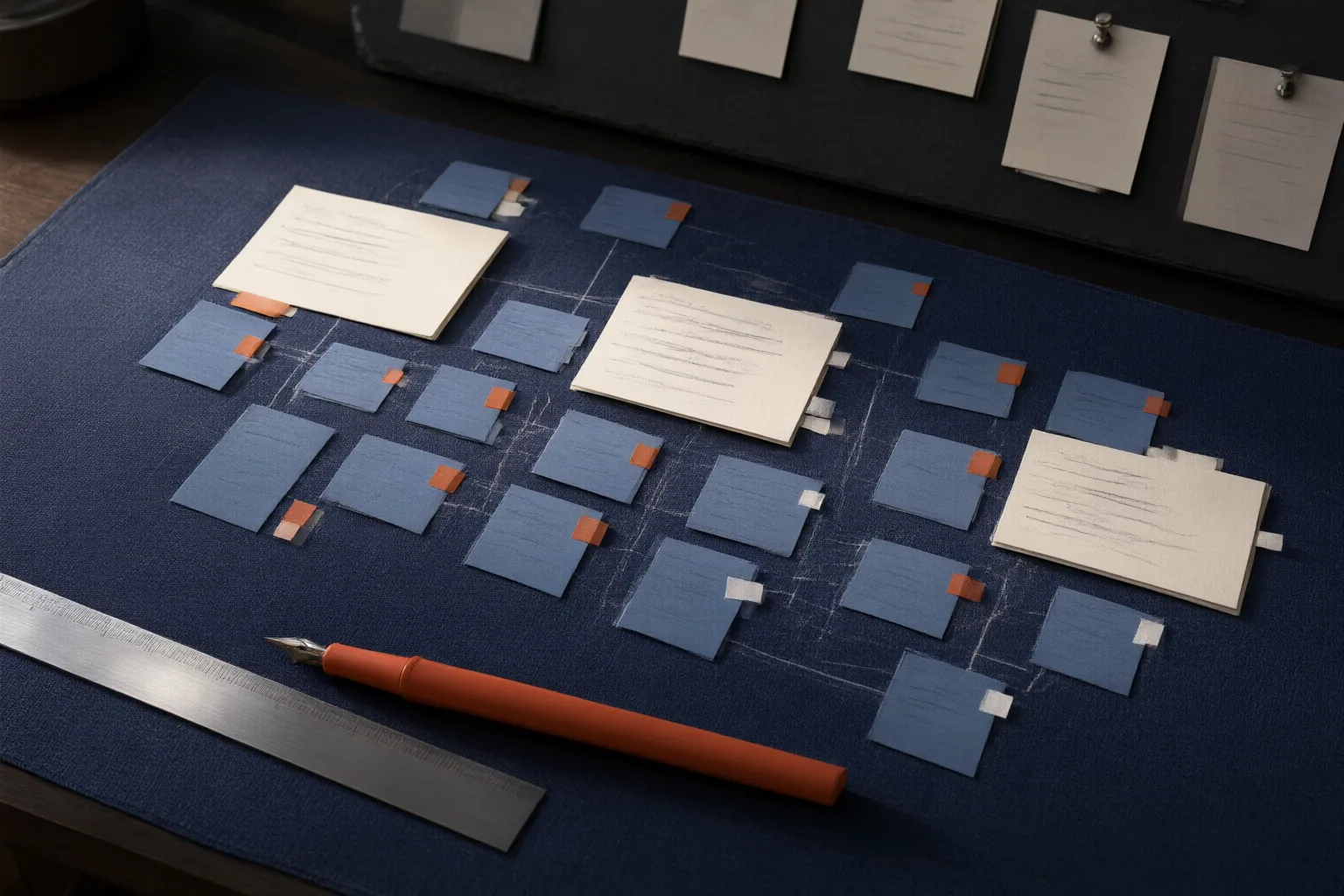
Expand Beats Into Dramatic Scenes
For every potential scene, identify the character pursuing the immediate goal, what blocks that pursuit, and what differs by the end. Make the goal specific enough that the outcome can be recognized: the character succeeds, fails, compromises, discovers something, pays a cost, or changes direction.
A useful transferable framework is goal, conflict, outcome, reaction, and decision. It comes from guidance about scene structure beyond screenwriting, so treat it as a diagnostic tool rather than a screenplay rule. The elements do not need equal space or separate labels. A reaction may be brief, and an outcome can blend directly into the decision that launches the next scene.
When a beat centers on learning information, specify how the character obtains it, who or what resists, and what the discovery costs. Then add the response that makes the information matter. The resulting decision should alter a later goal, relationship, risk, or course of action. This converts exposition into a chain of behavior and consequences rather than a sequence of explanations.

Find and Fix Repetitive Beats
Read the outline as a chain of causes. Between major turns, try replacing the transition with “therefore” or “but.” “Therefore” indicates that one event produces the next; “but” introduces resistance or reversal. If the only accurate connection is “and then,” the sequence may feel episodic because chronology, rather than consequence, is holding it together.
Next, label each scene by its outcome and resulting decision. Look for several scenes that end with the same discovery, refusal, argument, escape, or unresolved intention. Repetition is not merely a repeated setting or character; the more important warning is repeated dramatic function without a new cost, reversal, contrast, or choice.
Also flag long stretches without meaningful decisions, entries that only deliver information, and important characters who disappear from the outline. Check whether each scene’s problem grows from an earlier event and whether its decision affects something later.
Repair weak sequences by merging duplicate scenes, moving a scene closer to the event that causes it, or changing the resistance and outcome. Contrast can also help: a public defeat may lead to a private decision, while an apparent victory may introduce a larger cost. After revising, repeat the causal test to confirm that every retained scene advances a distinct change.
Conclusion
A practical conversion follows five questions: What changes? Who wants what? What resists that goal? What is the outcome? What consequence or decision follows? Use as many scenes as the beat needs, then audit their outcomes instead of forcing a fixed scene count.
Choose one major beat now. Expand it with the goal-obstacle-change framework, connect its scenes through cause and consequence, and merge or revise any entries that deliver duplicate outcomes.
Disclosures and limitations
- This article was prepared with AI assistance from the supplied ForgePad, Katri Soikkeli, and Open Screenplay research materials; claims were limited to those sources.
- No products, prices, ratings, or affiliate recommendations are included because the supplied research contained no verified product records.
Related reading
- Screenwriting Workflow Guides
- Final Draft Screenwriting Software: A Practical Workflow and Buying Guide
Sources
- Should you write a scene outline for your novel? — Protagonist Crafts by Katri Soikkeli
- How to write a screenplay beat sheet — forgepad.app
- Unleash the Storyteller Within — openscreenplay.com