
Turn reader feedback into a manageable rewrite by requesting decision-focused responses, separating reported problems from suggested fixes, grouping patterns without counting votes, and testing one defined change across the affected scenes.
Ask for Feedback That Supports Decisions
Useful feedback begins before readers open the screenplay. Tell them what stage the draft has reached, then ask two or three focused questions about decisions you are genuinely considering. A broad request for general impressions may generate many reactions but leave no clear next step. Focused prompts give readers a practical frame and help the writer compare responses against the rewrite’s actual needs.
Reader comments and coverage should be treated as inputs, not automatic instructions. Screenwriting.info describes screenplay creation as collaborative and reports that coverage helped its author identify areas requiring a rewrite. That collaboration is most useful when the writer remains responsible for diagnosing the draft and deciding what to change.
Sort Reactions by Problem, Pattern, Taste, and Test
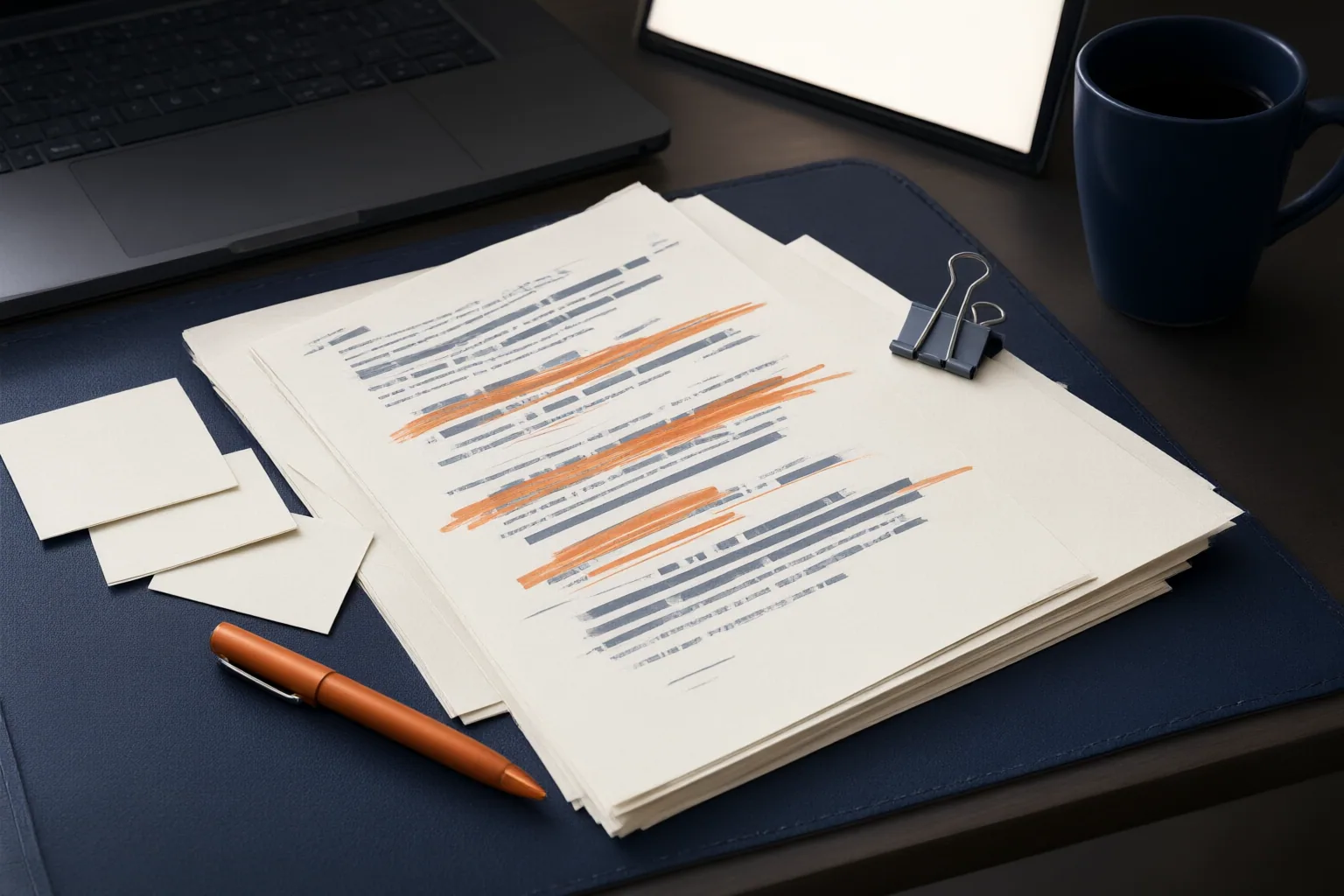
Begin by separating a reader’s experience from the fix they propose. A suggestion to delete, combine, or rewrite a scene may be prompted by repetition, confusion, or lost attention. Record that underlying reaction first; it is evidence about the reading experience, while the proposed solution is only one possible response.
Next, sort the notes into four working categories:
- Clear problems: reactions that identify a specific obstacle in the draft.
- Recurring patterns: similar experiences reported across scenes or readers.
- Matters of taste: conflicting preferences that may not indicate a defect.
- Questions to test: plausible concerns that need a controlled revision before a decision can be made.
Do not turn this process into mechanical vote counting. Several readers can notice the same pattern for different reasons, while one precise observation can expose an important issue. Compare what readers experienced, where it happened, and whether the concern connects to the rewrite’s goals. When responses conflict, identify whether the disagreement reflects taste or a question that can be tested in the script.

Build and Complete a Focused Rewrite Pass
Convert the highest-priority concern into a bounded pass. First, define the problem in one sentence. Then collect every scene affected by that problem so the revision can be considered as a sequence rather than as isolated lines. Choose the smallest change capable of testing the diagnosis, apply it throughout the selected material, and finish the pass before judging the result. Finally, reread the revised sequence without keeping the old notes in view. This creates a cleaner test of whether the new version addresses the original reading experience.
Revision software can help organize this work, but it does not replace editorial judgment. In a 2021 review of Final Draft 12, PCMag reported that Track Changes distinguished collaborators’ edits and allowed changes to be accepted or rejected separately or together. The same review described ScriptNotes displayed as flags on screenplay pages, illustrating how notes can remain near relevant material. These are dated examples from that review, not confirmation of current Final Draft versions, pricing, availability, or features.
Keep structural work ahead of dialogue polish when the structure may still change. Refining lines inside a sequence that could later be removed risks spending effort on material that will not survive the pass.
Conclusion
A structured screenplay rewrite moves from reaction to diagnosis, then from diagnosis to a limited test. Ask focused questions, preserve the reader experience beneath each proposed fix, group patterns without treating them as votes, and complete one coherent pass before reassessing it. Collaboration and coverage can reveal material needing revision, but the writer still chooses the response. Start now: select one recurring concern, define the underlying problem in one sentence, gather the affected scenes, and test the smallest structural change that could address it before polishing dialogue.
Disclosures and limitations
- This article was prepared with AI assistance using only the supplied research package, which attributes its evidence to ForgePad, Screenwriting.info, and PCMag. It contains no product recommendation or affiliate offer.
- The Final Draft 12 examples come from PCMag’s review published July 16, 2021, and should not be read as verification of the software’s current features, version, price, or availability.
Related reading
Sources
- Teams | v0 Docs — v0.app
- How to receive screenplay feedback and turn it into a stronger rewrite — forgepad.app
- Screenwriting.info: How to Write a Screenplay — screenwriting.info
- You're navigating design revisions with clients. How can you set clear expectations for a smoother process? — linkedin.com
- File:Blank.png – Wikipedia — en.wikipedia.org
- Final Draft Review — PCMAG
- Finalizing Project Documentation — linkedin.com
